
What Should I Do If My Sewer Is Backing Up in Chula Vista
Rated 5 stars by Chula Vista neighbors
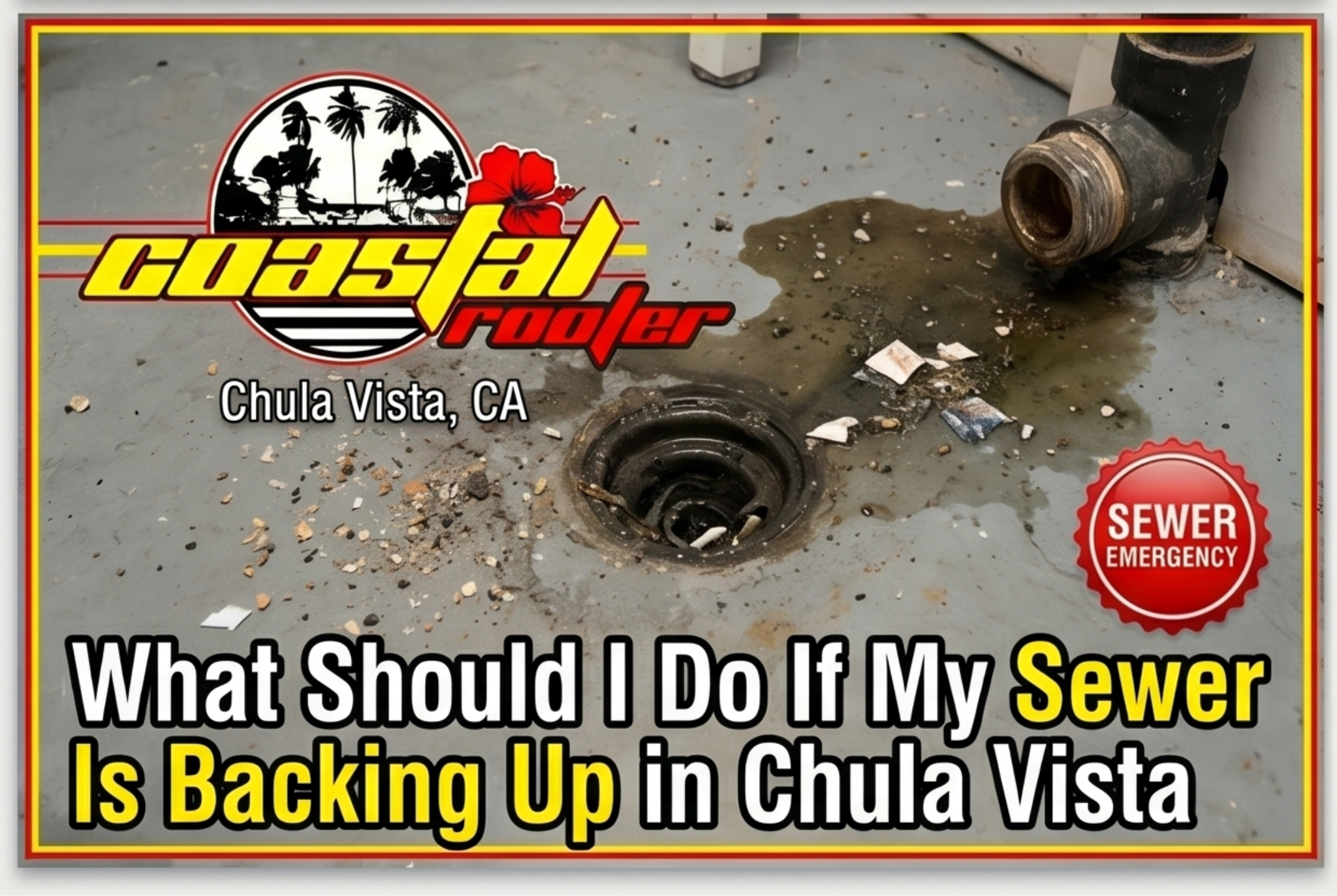
Sewage coming up through a tub, shower, floor drain or toilet is one of the worst plumbing problems a homeowner can face. It is unpleasant, it is a health hazard, and it gets worse every time someone runs water. Here is exactly what to do in the first few minutes, what is likely causing it, and how to keep it from happening again.
What to do right now
- Stop using water everywhere in the house. No flushing, no showers, no dishwasher or washing machine. Every gallon you send down has nowhere to go but back up.
- Keep people and pets away from any area with sewage. Raw sewage carries bacteria and viruses.
- Do not try chemical drain cleaners. They will not clear a main line blockage, and they make the water dangerous to work around.
- Shut off electricity to affected areas if water is near outlets, cords or appliances, and only if you can reach the panel without standing in water.
- Open windows for ventilation.
- Take photos of the affected areas for insurance before cleanup starts.
- Call a plumber who handles main line backups. Sewer backups are a 24 hour emergency service for us.
How to tell whether it is a drain clog or a sewer backup
If only one fixture is affected and water still goes down slowly, you may have a local drain clog. If sewage is coming up into the lowest drains in the house, or if flushing a toilet makes water rise in the tub, the main sewer line is blocked. Our explainer on drain clogs vs. sewer backups covers this in more detail.
What causes sewer backups in Chula Vista homes
- Tree roots that have grown into older clay or cast iron sewer laterals, which is common in established neighborhoods. See how tree roots damage sewer pipes.
- Grease from kitchen drains that hardens in the line over months and years
- Wipes, paper towels and hygiene products, including wipes labeled flushable
- A broken, cracked or sagging sewer line. Learn the signs of a broken sewer line.
- A blockage in the city main. Less common, but if neighbors are having the same problem at the same time, call the city's wastewater emergency line as well.
How a plumber clears a sewer backup
- Access the line through the sewer cleanout, usually a capped pipe near the foundation or front yard.
- Clear the blockage with a cable machine or hydro jetting. Jetting scours grease and roots off the pipe walls instead of just punching a hole through them.
- Run a camera inspection to see why the line backed up. Roots, cracks or a sag in the pipe mean the backup will come back unless the pipe is repaired.
- Repair if needed, often without digging up the yard using trenchless sewer line repair.
Cleaning up after a sewer backup
Category 3 water, which is what sewage is, should be cleaned up by people with protective equipment. Porous materials it has soaked into, such as carpet, pad, drywall and insulation, usually need to be removed. Hard surfaces need to be cleaned and disinfected. If more than a small area is affected, a water damage restoration company is the right call for cleanup after the plumbing is fixed. Read water damage vs. plumbing leak: who to call first to sort out the order.
Will insurance cover a sewer backup?
Many standard homeowners policies exclude sewer backups unless you have added a specific water backup endorsement. Check your policy and call your agent early. Our guide on whether insurance covers your plumbing problem explains what to look for.
How to prevent sewer backups
- Keep grease out of the kitchen sink. Let it cool and put it in the trash.
- Flush only toilet paper. No wipes of any kind, paper towels, or hygiene products.
- Know where your cleanout is and keep it accessible, so a plumber can reach the line fast.
- Schedule maintenance cleaning if your home has a history of roots or grease buildup. Clearing a line every year or two costs far less than a backup.
- Get a camera inspection if your home is older or you have had more than one backup. It shows whether the pipe needs repair before it fails completely.
- Consider a backwater valve if your home sits below the street and has had backups from the city side.
- Watch for early signs: gurgling toilets, several slow drains, or water in the tub when you flush. See slow drains and what they mean.
Frequently asked questions
Is a sewer backup an emergency?
Yes. Sewage is a health hazard and the damage spreads quickly. We answer 24 hours a day.
Can I use my toilet if the sewer is backing up?
No. Any water you send down will come back up at the lowest drain in the house.
Why does my sewer back up every year?
Recurring backups usually mean roots, a sag in the line, or a damaged pipe. Clearing the line treats the symptom. A camera inspection finds the cause.
Sewer backing up? Call now
Coastal Rooter handles sewer backups throughout Chula Vista and San Diego County, 24 hours a day. Call (760) 893-9152 and a real plumber answers. See our emergency plumbing services or request service online.
Request a plumbing technician
Tell us what’s going on and we’ll get right back to you. Need help now? Call and a real plumber answers 24/7.