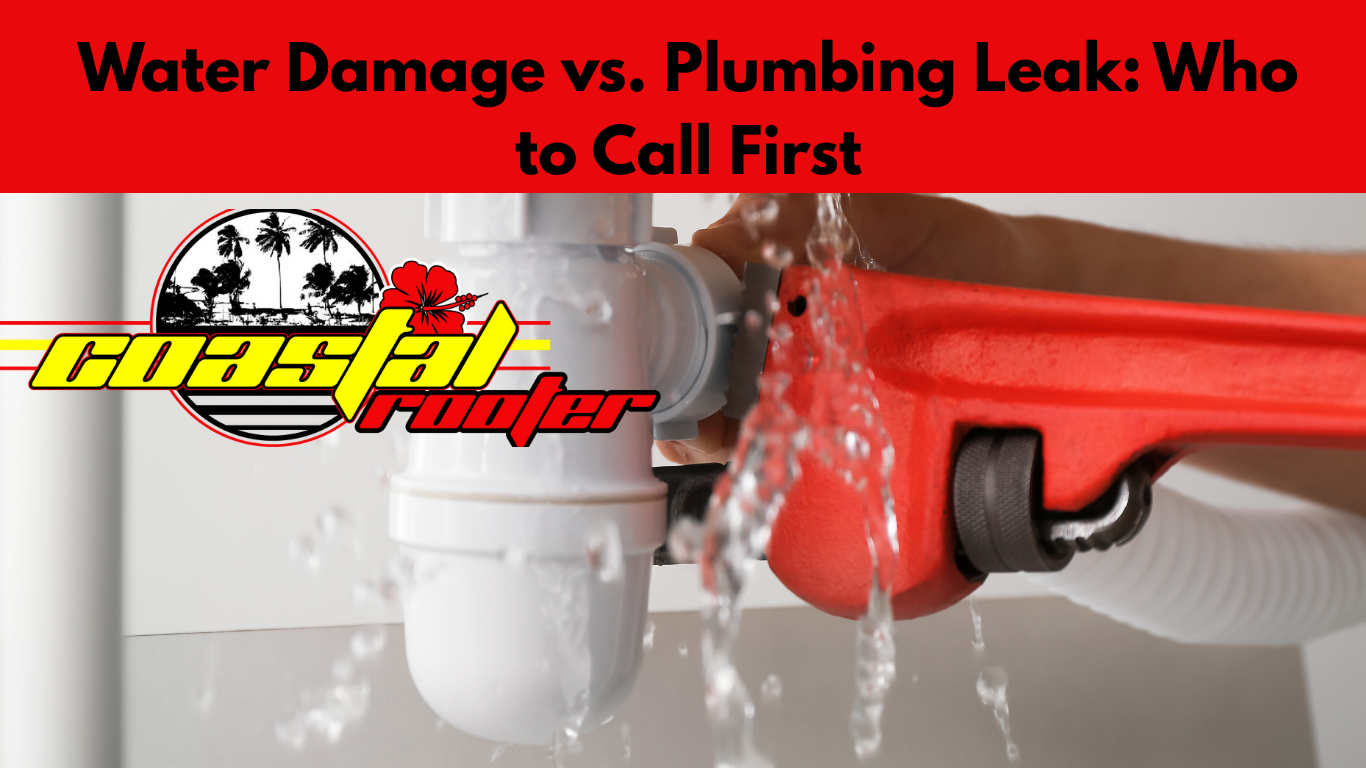
Water Damage vs. Plumbing Leak: Who to Call First
Rated 5 stars by Chula Vista neighbors
Coastal Rooter helps San Diego homeowners understand the difference between plumbing leaks and water damage—and who to call first when a water emergency hits.
If you notice water on the floor, bubbling paint, or warped flooring, your first instinct might be to panic. But before you do, it helps to know what you’re looking at: a plumbing leak or water damage. The distinction matters because it determines who to call first—a plumber or a restoration company.
This guide explains the difference between water damage and plumbing leaks, what signs to watch for, and how to take the right first step to minimize repairs and costs.
Plumbing Leak?
A plumbing leak is an active source of unwanted water, usually from a pipe, fitting, or water-based appliance. It may be small—like a slow drip under the sink—or large, like a burst pipe flooding your floor.
Common plumbing leak sources include:
- Broken pipe fittings
- Leaky toilets or faucets
- Water heater leaks
- Under-slab or wall pipe leaks
If the water is still flowing or dripping, you likely have an active leak—and a plumber is your first call.
Water Damage?
Water damage refers to the visible or structural effects of water exposure. It could be the result of a past leak, an old roof issue, or even high humidity. Water damage can appear even after the leak has been fixed.
Signs of water damage include:
- Stained ceilings or walls
- Buckled or warped flooring
- Mold growth or musty smells
- Soft drywall or wood
If the water source is already stopped and the main issue is cleanup or restoration, a water damage specialist may be needed.
How to Tell The Difference Right Away
If you discover standing water or a new stain, take these quick steps:
- Check for an active water source. Is water still dripping, leaking, or spraying?
- Shut off the main water valve. This stops ongoing leaks and limits damage.
- Feel for temperature or sound. Warm spots on floors or hissing behind walls often mean a hidden leak.
- Look for visible mold or damage. Mold and dry staining often point to past water damage, not an active leak.
Still unsure? Schedule a plumbing inspection to locate the source quickly.
Who to Call First: Plumber vs. Restoration Company
Here’s a simple rule:
- If water is still coming in, call a plumber first.
- If the water source is off and damage remains, call a restoration pro.
Plumbers like Coastal Rooter can:
- Locate and fix hidden or visible leaks
- Stop water from spreading
- Repair pipe fittings, valves, or broken appliances
Restoration companies focus on:
- Drying out soaked materials
- Removing mold or bacteria
- Repairing walls, floors, and structural damage
“We saw a bubble in the ceiling and weren’t sure who to call. Coastal Rooter found a pinhole leak and fixed it before it ruined our drywall.” — San Diego homeowner
When Leaks Lead to Both Problems
In many cases, you’ll need both a plumber and a restoration crew, but timing matters. Calling a plumber first limits how far the water spreads. Once the leak is stopped, the restoration team can assess what needs to be dried or replaced.
Trying to dry out water without fixing the source first is like mopping with the faucet still running.
Truth on What Insurance Usually Covers
Homeowner’s insurance typically covers sudden and accidental water damage—but not long-term leaks or maintenance issues.
Most policies may cover:
- Burst pipes
- Overflowing appliances
- Accidental leaks
They may not cover:
- Long-standing mold
- Damage from poor maintenance
- Leaks that were ignored
Documenting the problem early helps with claims. Coastal Rooter provides written reports, photos, and timestamps to support insurance cases.
Info San Diego Homeowners Should Know
San Diego homes face unique plumbing challenges:
- Aging pipes in older neighborhoods
- Slab foundations where leaks are hidden
- Water heater corrosion from hard water
Coastal Rooter specializes in detecting leaks quickly and making same-day repairs. Their team knows how to work alongside restoration contractors and insurance adjusters.
They also help homeowners:
- Shut off water in an emergency
- Understand repair timelines
- Prevent future leaks with annual inspections
For tips on preventing water-related problems, visit the EPA’s home water use guide.
Facing a Plumbing Leak or Water Damage; Call Coastal Rooter
If you’re dealing with a plumbing leak or water damage, call 619-383-2210 to get help fast. Coastal Rooter will identify the source, stop the leak, and connect you with the right follow-up services.
Request a plumbing technician
Tell us what’s going on and we’ll get right back to you. Need help now? Call and a real plumber answers 24/7.